Species profile
Hackberry
Celtis occidentalis
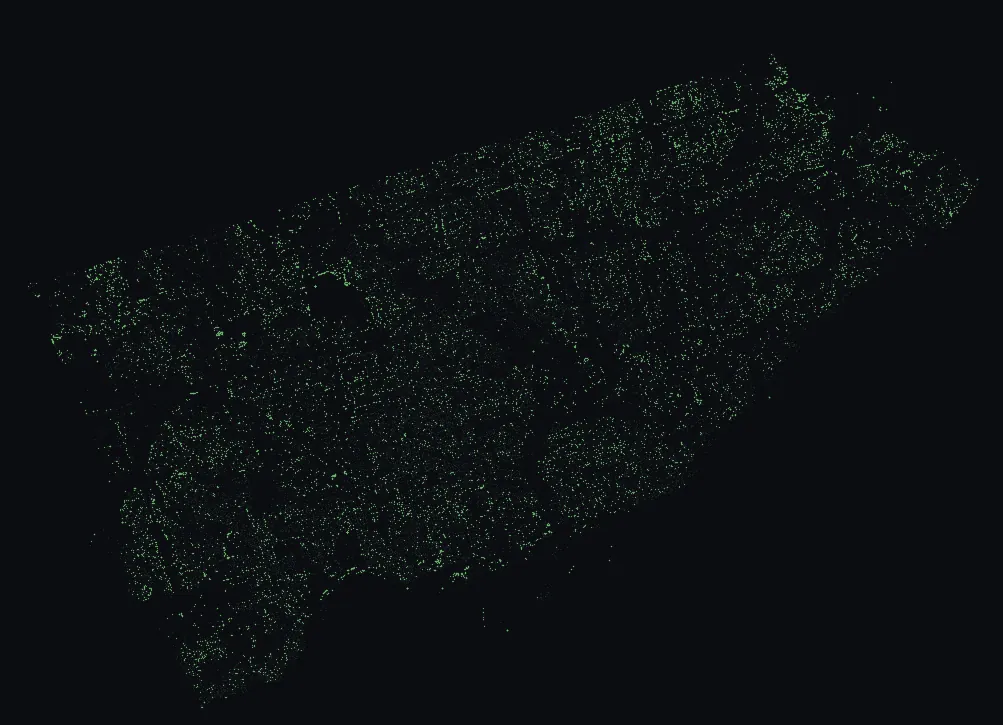
14,129 on Toronto's streets — 2.05% of the city's catalogued canopy.
🍁 Fall colour Oct 1 – Oct 20: yellow
Toronto history — Hackberry — native, tough, underused. The city's planting program has leaned into it since the 2010s as an honest native alternative to the engineered cultivars.
Celtis occidentalis, commonly known as the common hackberry, is a large deciduous tree native to North America. It is also known as the nettletree, beaverwood, northern hackberry, and American hackberry. It is a moderately long-lived hardwood, with a light-colored wood that is yellowish gray to light brown with yellow streaks.
Planting profile (from the City of Toronto)
| Native to | Native to Ontario |
| Mature size | Large, 16m high by 14m wide |
| Growth rate | Fast |
| Sensitivity | Hardy |
| Best site | Lawns and boulevards |
| Of note | Interesting bark |
| Plants under overhead wires | No |
Where they cluster
| Neighbourhood | Trees |
|---|---|
| York University Heights | 448 |
| Morningside Heights | 447 |
| West Humber-Clairville | 431 |
| Milliken | 340 |
| Agincourt North | 284 |
| Mount Olive-Silverstone-Jamestown | 255 |
| Steeles | 234 |
| Malvern East | 220 |
Notable specimens
- 100 cm DBH at 90 SUMMERHILL AVE · view →
- 86 cm DBH at 237 CHAPLIN CRES · view →
- 77 cm DBH at 63 VESSEL CRES · view →
- 71 cm DBH at 236 GRENVIEW BLVD S · view →
- 70 cm DBH at 10 CURRAN HALL CRES · view →
- 68 cm DBH at 160 CASTLEFIELD AVE · view →
- 66 cm DBH at 226 LOGAN AVE · view →
- 65 cm DBH at 111 SAMMON AVE · view →